
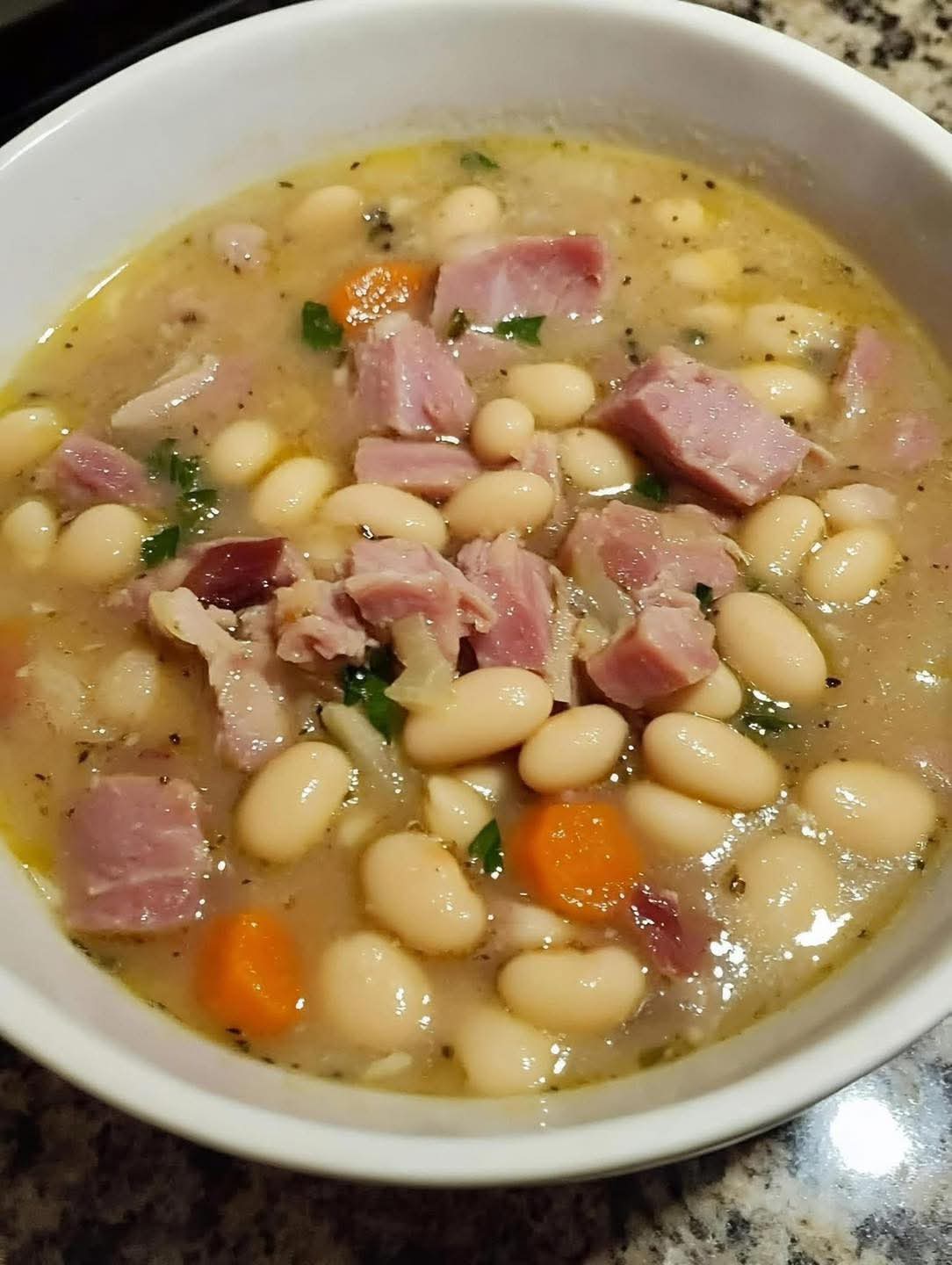
White Beans and Ham Hock Soup
White Beans and Ham Hock Soup is a classic, comforting dish that has been enjoyed for generations.
Rooted in traditional home cooking, this soup represents warmth, patience, and deep flavor.
It is the kind of recipe that fills a kitchen with rich aromas and brings people together around the table.
Simple in its ingredients yet complex in taste, this soup is a perfect example of how slow cooking
can transform humble components into something truly memorable.
Introduction to the Dish
This soup is built on the foundation of white beans and ham hock, two ingredients that complement
each other beautifully. White beans provide a creamy texture and mild flavor, while the ham hock
adds smokiness, saltiness, and depth. When simmered together over time, the beans absorb the savory
essence of the meat, creating a broth that is hearty and satisfying.
White Beans and Ham Hock Soup is often associated with rustic cuisine and family traditions.
It is commonly prepared during colder months, but its nourishing qualities make it suitable for
any time of the year. The dish is not only filling but also economical, making it a favorite in
households that value both flavor and practicality.
History and Cultural Background
The origins of White Beans and Ham Hock Soup can be traced to rural cooking traditions in Europe
and later in North America. In many cultures, nothing was wasted in the kitchen, and tougher cuts
of meat like ham hocks were prized for their ability to add flavor when cooked slowly.
Beans, being affordable and easy to store, became a staple food that paired perfectly with such meats.
As families migrated and settled in different regions, the recipe evolved. Variations appeared
depending on available ingredients, but the core concept remained the same.
In many American households, especially in the South, this soup became a symbol of comfort food,
often served with cornbread or crusty bread on the side.
Main Ingredients Overview
The beauty of White Beans and Ham Hock Soup lies in its simplicity. The primary ingredients are
white beans, ham hock, water or broth, and basic aromatics. Each ingredient plays a vital role
in the final outcome of the soup.
White beans, such as navy beans or great northern beans, are ideal for this recipe.
They hold their shape well while also releasing starch, which thickens the soup naturally.
Ham hock, taken from the lower part of a pig’s leg, contains meat, fat, and connective tissue,
all of which contribute to the soup’s rich texture and flavor.
The Role of White Beans
White beans are the heart of this soup. Their mild flavor allows them to absorb the smoky essence
of the ham hock while maintaining their own creamy character.
When cooked slowly, white beans become tender without falling apart, creating a pleasant mouthfeel.
In addition to texture and taste, white beans are highly nutritious.
They are an excellent source of plant-based protein, fiber, and essential minerals.
This makes the soup not only delicious but also nourishing and satisfying.
The Importance of Ham Hock
Ham hock is the soul of the soup. It brings depth and complexity that cannot be replicated with
simpler cuts of meat. As it simmers, the collagen and marrow within the ham hock break down,
adding body and richness to the broth.
The meat from the ham hock becomes tender and flavorful over time.
Once removed from the bone and returned to the soup, it provides small, savory bites that balance
perfectly with the softness of the beans.
Aromatics and Supporting Ingredients
While beans and ham hock form the base, aromatics such as onions, garlic, and celery enhance
the overall flavor profile. These ingredients are usually sautéed briefly before simmering,
which helps release their natural sweetness and aroma.
Herbs like bay leaves and thyme are often added to provide subtle layers of flavor.
Black pepper is commonly used for gentle heat, while salt is added carefully due to the natural
saltiness of the ham hock.
Preparation Process
Preparing White Beans and Ham Hock Soup requires time and patience, but the process itself is simple.
The beans are typically soaked beforehand to ensure even cooking and better digestion.
This step also reduces the overall cooking time.
Once the beans are ready, the ham hock is placed in a large pot with water or broth.
The aromatics are added, and the mixture is brought to a gentle simmer.
Over the course of several hours, the flavors meld together, resulting in a deeply savory soup.
Slow Cooking and Flavor Development
Slow cooking is essential to achieving the best results with this soup.
A low and steady simmer allows the ham hock to release its flavor gradually,
while the beans soften and thicken the broth naturally.
Rushing the process can result in underdeveloped flavors and uneven texture.
As the soup cooks, it is important to skim off any foam that rises to the surface.
This keeps the broth clear and improves the final taste.
Occasional stirring ensures that the beans cook evenly and do not stick to the bottom of the pot.
Texture and Consistency
One of the defining characteristics of White Beans and Ham Hock Soup is its comforting texture.
The broth is thick but not heavy, thanks to the starch released by the beans.
Some cooks choose to mash a portion of the beans to achieve a creamier consistency.
The balance between whole beans, tender meat, and flavorful broth is key.
Each spoonful should contain a bit of everything, creating a harmonious eating experience
that feels both rustic and refined.
Serving Suggestions
This soup is best served hot, straight from the pot.
It pairs wonderfully with simple sides that complement its hearty nature.
Crusty bread, warm rolls, or cornbread are popular choices.
For a complete meal, the soup can be accompanied by a light salad or steamed vegetables.
The richness of the soup contrasts nicely with fresh, crisp textures on the side.
Storage and Reheating
White Beans and Ham Hock Soup stores exceptionally well.
In fact, many people believe it tastes even better the next day,
as the flavors have more time to develop and meld together.
The soup can be stored in the refrigerator for several days in an airtight container.
When reheating, it should be warmed gently over low heat to preserve its texture and flavor.
Additional water or broth can be added if the soup thickens too much.
Variations and Adaptations
While the traditional recipe is beloved, there are many ways to adapt this soup.
Some variations include adding carrots, potatoes, or leafy greens for extra nutrition and color.
Others may incorporate different herbs or spices to suit personal taste.
Despite these variations, the essence of the soup remains the same.
It is a dish that celebrates simplicity, patience, and the power of slow cooking.
Each adaptation adds a personal touch while honoring the original spirit of the recipe.
Why This Soup Endures
White Beans and Ham Hock Soup has stood the test of time because it delivers comfort and nourishment
in every bowl. It is deeply satisfying without being complicated,
making it accessible to cooks of all skill levels.
The dish represents a connection to tradition and home cooking.
It reminds us that good food does not need to be elaborate to be meaningful.
Sometimes, the most memorable meals are those made with care, time, and simple ingredients.
Conclusion
In conclusion, White Beans and Ham Hock Soup is more than just a meal.
It is a reflection of culinary heritage, resourcefulness, and the joy of slow, thoughtful cooking.
From its rich history to its comforting flavor, this soup continues to be a favorite for good reason.
Whether prepared for family, friends, or personal enjoyment, this soup offers warmth and satisfaction.
Its timeless appeal lies in its ability to nourish both the body and the soul,
making it a true classic in the world of home-cooked food.