
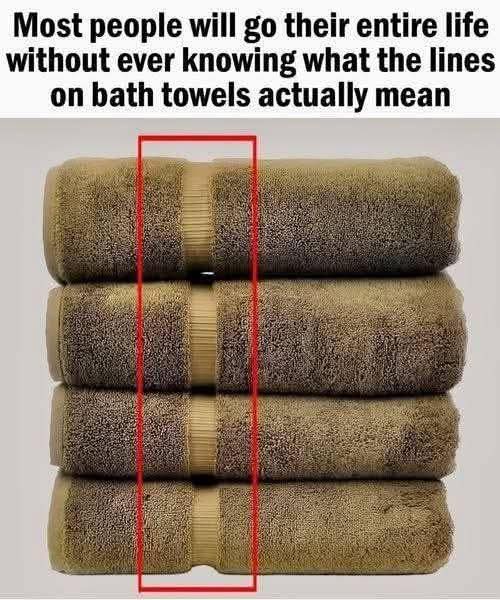
What Are the Lines on Bath Towels?
Bath towels are everyday household items that most people use without giving much thought to their design.
However, many people notice the distinctive lines or bands that run across bath towels and wonder about their purpose.
These lines are not random, decorative accidents, nor are they flaws in the fabric.
They are intentionally designed features that serve practical, structural, and aesthetic purposes.
In this article, we will explore in detail what the lines on bath towels are, why they exist, how they are made,
and how they contribute to the towel’s performance, durability, and appearance.
Understanding the Basic Structure of a Bath Towel
To understand the lines on bath towels, it is important first to understand how towels are constructed.
Most bath towels are made from cotton or cotton blends and use a weaving technique known as terry cloth.
Terry cloth is characterized by loops of yarn that stand up from the surface of the fabric.
These loops increase the towel’s surface area, allowing it to absorb more water.
A typical towel is made up of several components: the pile (the looped fibers), the base fabric, the edges,
and the decorative or functional bands. The lines you see on a towel are often part of these bands,
which are woven differently from the rest of the towel.
They are sometimes referred to as dobby borders, woven bands, or decorative stripes.
What Exactly Are the Lines on Bath Towels?
The lines on bath towels are usually flat-woven sections where the looped terry fabric is replaced by a tighter,
smoother weave. These sections often appear near the ends of the towel, running horizontally from one side to the other.
In some designs, you may also see multiple lines or patterns forming a band.
Although they may look purely decorative, these lines serve several important functions.
They help maintain the towel’s shape, prevent fraying, improve durability, and provide a visual break in the fabric.
In many cases, they also assist in the manufacturing process by stabilizing the towel during weaving.
The Practical Purpose of Towel Lines
One of the primary reasons for the lines on bath towels is functionality.
The flat-woven bands are stronger and less stretchy than the looped terry fabric.
This strength helps reinforce the towel in areas that experience frequent pulling, folding, and hanging.
When you hang a towel on a rack or hook, the ends of the towel bear much of the stress.
The woven lines help distribute this stress more evenly, reducing the likelihood of the towel losing its shape over time.
Without these reinforced sections, towels could stretch unevenly or become misshapen after repeated use and washing.
Preventing Fraying and Wear
Another important function of the lines on bath towels is to prevent fraying.
The edges of a towel are particularly vulnerable to wear and tear because they are exposed to friction,
washing machine agitation, and repeated handling.
The flat-woven bands act as a transition zone between the soft terry loops and the finished edges of the towel.
This transition helps lock the fibers in place and reduces the risk of loose threads forming.
As a result, towels with well-made woven bands tend to last longer and maintain a cleaner appearance.
Enhancing Absorbency and Drying Performance
At first glance, it may seem that removing terry loops in certain areas would reduce a towel’s absorbency.
However, the opposite is often true. By strategically placing flat-woven lines, manufacturers ensure that
the towel dries more evenly and efficiently.
The flat sections dry faster than the looped areas, which can help reduce moisture buildup at the ends of the towel.
This faster drying can minimize the growth of unpleasant odors and bacteria, keeping the towel fresher between washes.
In this way, the lines contribute indirectly to hygiene and comfort.
The Role of Lines in Towel Manufacturing
The lines on bath towels also play an important role during the manufacturing process.
When towels are woven on industrial looms, maintaining consistent tension across the fabric is crucial.
The flat-woven bands help stabilize the towel as it is produced, ensuring uniform size and shape.
These bands can also serve as reference points for cutting and finishing the towels.
In mass production, precise measurements are essential, and the woven lines provide visual and structural guides.
This improves efficiency and reduces waste during manufacturing.
Decorative and Aesthetic Value
While functionality is a major reason for the lines on bath towels, aesthetics should not be overlooked.
The lines add visual interest and help define the towel’s design.
They can make a towel look more refined, balanced, and complete.
Many towel designs use these lines to create a sense of symmetry.
Even simple, solid-colored towels benefit from the subtle texture contrast between the terry cloth and the flat weave.
This contrast gives the towel a finished, professional appearance that appeals to consumers.
Different Types of Lines and Bands
Not all towel lines are the same. Some towels feature a single thick band near each end,
while others include multiple thin lines or intricate patterns.
The design often depends on the brand, price point, and intended use of the towel.
Luxury towels may feature wider, more elaborate bands woven with detailed patterns.
Budget towels may have simpler, narrower lines that focus primarily on function rather than decoration.
Regardless of complexity, the underlying purpose of these lines remains largely the same.
Are the Lines the Same as Borders?
The terms “lines,” “bands,” and “borders” are often used interchangeably when talking about bath towels.
Technically, the border refers to the entire decorative or reinforced section near the edge,
while the lines are the visible elements within that border.
In many cases, the border includes both flat-woven areas and stitched hems.
Together, these components create a strong, durable edge that resists unraveling and deformation.
Understanding this distinction helps clarify why towels are designed the way they are.
Do the Lines Affect Comfort?
Some people worry that the flat-woven lines might feel rough or uncomfortable against the skin.
In practice, this is rarely an issue. The bands are usually positioned at the ends of the towel,
not in the central area that comes into direct contact with the body.
Additionally, high-quality towels use smooth, finely woven threads for these sections,
ensuring that they feel soft and unobtrusive. Over time and after several washes,
the bands often become even more comfortable.
Why Some Towels Have More Lines Than Others
The number and style of lines on a towel depend on several factors, including design trends,
manufacturing techniques, and intended use.
For example, hotel towels often feature simple, understated bands that emphasize durability and easy maintenance.
Home towels, on the other hand, may include more decorative elements to match bathroom decor.
In both cases, the lines are carefully planned to balance appearance, function, and cost.
How to Care for Towels with Woven Lines
Caring for towels with woven lines is no different from caring for towels without them,
but there are a few best practices to keep in mind.
Avoid using excessive fabric softener, as it can coat the fibers and reduce absorbency.
Washing towels in warm water and drying them on a moderate heat setting helps preserve both the terry loops
and the flat-woven bands.
Proper care ensures that the lines remain intact and continue to serve their purpose throughout the towel’s lifespan.
Common Myths About Towel Lines
One common myth is that the lines are purely decorative and serve no real function.
As we have seen, this is far from the truth.
Another misconception is that towels without lines are inferior or poorly made.
While many high-quality towels include woven bands, some minimalist designs omit them for stylistic reasons.
The presence or absence of lines does not automatically determine quality,
but well-designed lines often indicate thoughtful construction.
The Evolution of Towel Design
Towels have evolved significantly over time, from simple woven cloths to the plush, absorbent products we use today.
The introduction of terry cloth and woven borders marked important milestones in this evolution.
As manufacturing technology advanced, designers gained more control over texture, pattern, and durability.
The lines on modern bath towels are a result of this evolution, combining tradition with innovation.
Why the Lines Are Here to Stay
Given their many benefits, it is unlikely that the lines on bath towels will disappear anytime soon.
They provide structural support, enhance durability, improve drying performance, and add visual appeal.
As consumers continue to value both functionality and aesthetics, towel designs will likely continue
to incorporate these features in new and creative ways.
Conclusion
The lines on bath towels are far more than simple decorations.
They are carefully engineered features that contribute to the towel’s strength, longevity, and overall performance.
From preventing fraying and maintaining shape to enhancing appearance and aiding manufacturing,
these lines play a vital role in towel design.
The next time you use a bath towel, take a moment to notice these subtle details.
Understanding their purpose not only deepens your appreciation for everyday objects
but also highlights the thoughtful design behind even the simplest household items.